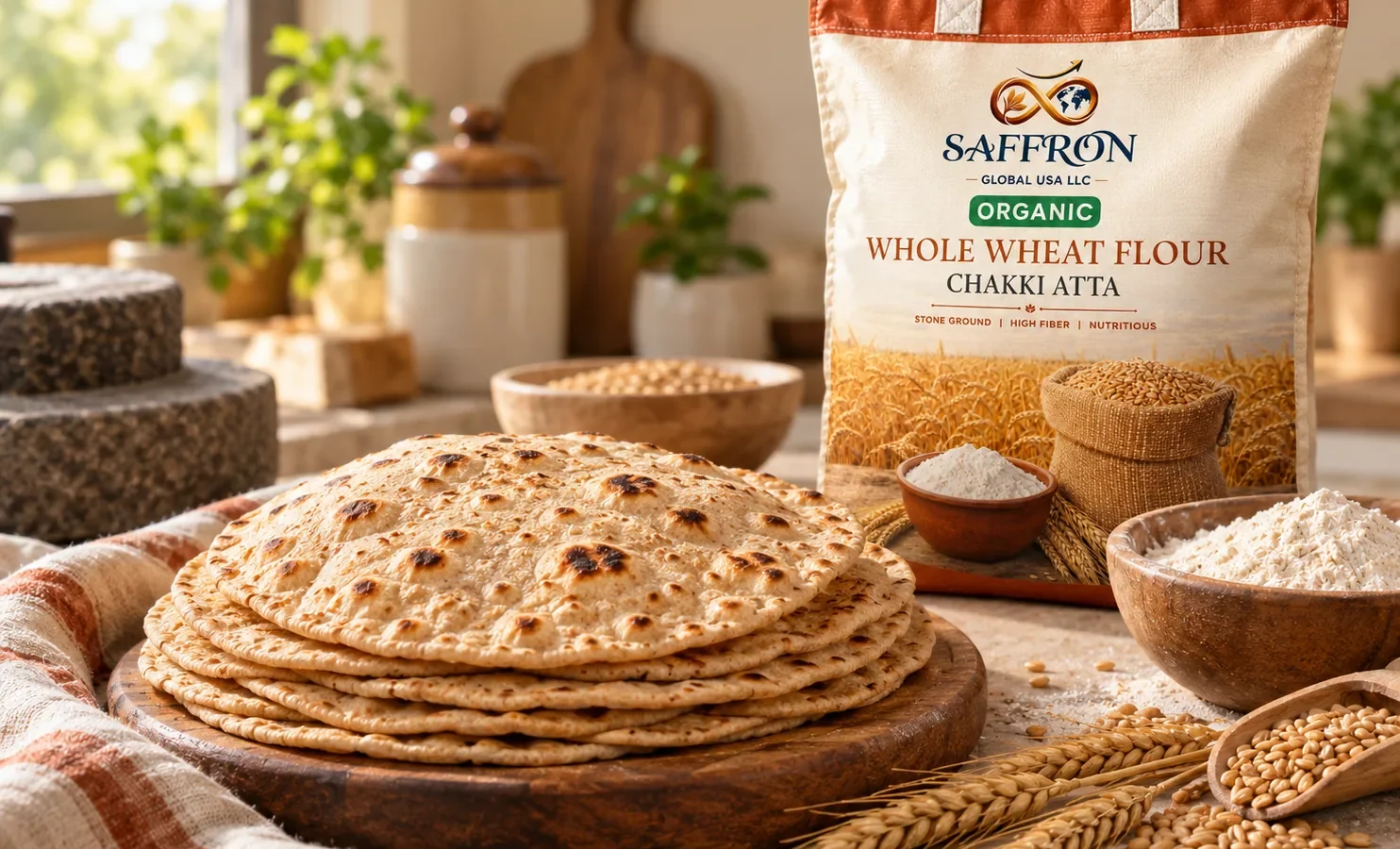
Whole wheat atta is milled from the entire wheat kernel, including the bran and the germ. That is what gives rotis their nutty flavor, and it is also why atta does not keep as long as white flour. The germ contains natural oils, and over time those oils go stale. Heat and humidity speed that up. Here is how to keep your flour fresh from the first roti to the last.
Why whole wheat flour goes bad
White flour has the germ removed, so there is very little oil left to spoil. Whole wheat flour keeps the germ, and its oils slowly oxidize when exposed to air, heat and light. Flour also pulls moisture from the air, which leads to clumping and, in humid weather, can attract pests or mold. None of this happens overnight, but good storage slows it down a lot.
Five habits that make the difference
- Use an airtight container. Once the bag is open, transfer the flour to a clean, completely dry glass or stainless steel container with a tight lid. Paper and woven bags let in air and moisture.
- Store it somewhere cool and dark. Keep it away from the stove, the oven, the dishwasher and sunny windows. A lower cabinet is usually the coolest spot in the kitchen.
- Keep a dry scoop in the container. Wet hands and damp measuring cups are the quickest way to get moisture into your flour.
- Do not pour new flour on top of old. Finish the older flour first, wash and dry the container, then refill it.
- Buy the right size. If you make rotis every day, a 10 lb bag makes sense. If you cook with atta once or twice a week, a smaller bag you finish in a couple of months will taste better.
Airtight, cool, dry and used in order. That covers most of what good flour storage takes.
Hot and humid weather
During a humid summer, many families keep atta in the refrigerator or freezer. Cold temperatures slow down the oils going stale and keep pests out. Take out only what you need and let it come to room temperature before you knead, so the dough comes together easily and no condensation forms inside the container. Some cooks also tuck a couple of dried bay leaves or whole dried red chilies into the container, a traditional way to keep weevils away.
How to tell if your flour has gone stale
Fresh atta smells sweet and wheaty. Stale flour smells sharp, bitter or a bit like crayons or old paint, which means the oils have oxidized. Other warning signs are hard clumps that do not break apart, a change in color or any sign of bugs. If you are not sure, start a fresh bag.
Fresh flour, soft rotis
To make rotis, mix 2 cups of atta with about 1 cup of warm water and a pinch of salt. Knead until smooth, cover and let the dough rest for 20 minutes. Roll into thin circles and cook on a hot tawa or skillet until they puff. Brush with a little ghee and serve warm.