Open a bag of good basmati and you can smell it right away: warm, a little nutty, almost like fresh popcorn. That scent is what sets basmati apart from other long grain rice. It is also why the best basmati is almost never sold right after harvest. It is aged first, often for a year or more.
Where the aroma comes from
Basmati is an aromatic rice. Like jasmine rice and pandan leaves, it naturally contains a compound called 2-acetyl-1-pyrroline, which is responsible for much of that popcorn-like smell. Basmati grown in the foothills of the Himalayas, with cool nights and rich river soil, tends to have more of it. The variety and the growing region set the ceiling. What happens after harvest determines how close the rice gets to it.
What aging does to the grain
Freshly harvested rice is still changing. It holds more moisture than it will in a few months, and its starches have not settled. Cook it right away and it usually turns soft and sticky, and the grains break or clump together.
Stored in cool, dry, well ventilated conditions, basmati changes slowly over the following months:
- It loses moisture. The grain gets firmer, so it absorbs water more evenly as it cooks.
- It releases less starch. Aged grains cook up separate and fluffy instead of gummy.
- It gets longer when cooked. Well aged basmati can almost double in length in the pot, staying slim rather than swelling.
- The aroma settles. The smell becomes fuller and less grassy.
New rice cooks up soft and sticky. Aged rice cooks up long, dry and separate.
What the label will not tell you
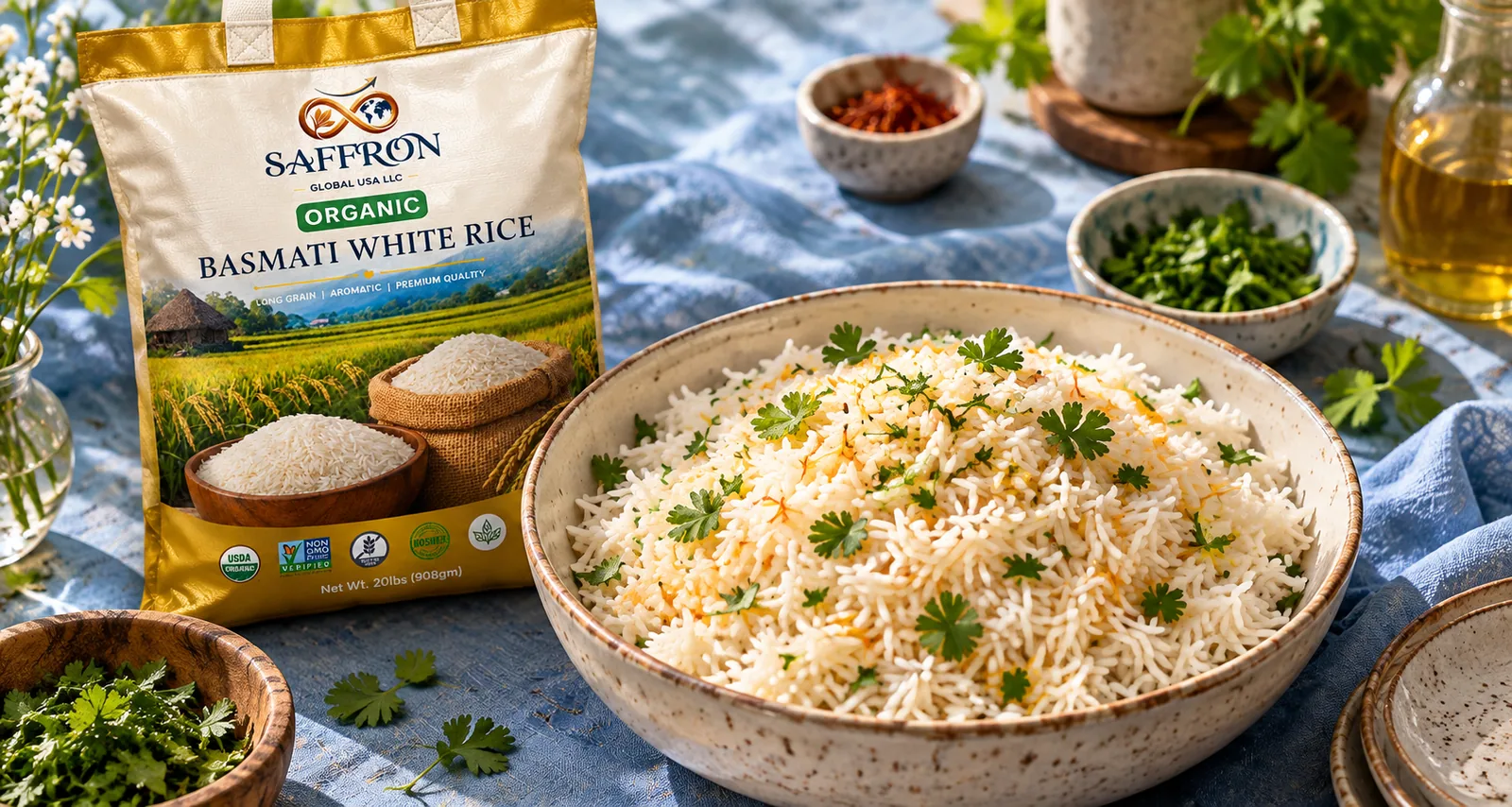
Words like premium, royal and extra long show up on a lot of rice bags, and none of them are regulated. The things that actually matter are the variety, where it was grown and how long it was aged. Our organic basmati is held in storage until it cooks the way we want, then milled and packed. That way the rice you buy behaves the way basmati is supposed to.
How to cook aged basmati
- Rinse it well. Swirl the rice in cold water and drain, three or four times, until the water runs mostly clear. This removes loose surface starch.
- Soak for 20 to 30 minutes. Soaking lets the grains hydrate evenly, so they lengthen without breaking.
- Measure the water. Use about 1½ cups of water for each cup of soaked, drained rice, plus a pinch of salt.
- Simmer covered, then rest. Bring to a boil, cover, and cook on low for 12 to 15 minutes. Take the pot off the heat and let it sit, still covered, for 5 minutes before fluffing with a fork.
For extra flavor, add a bay leaf, a few green cardamom pods or a teaspoon of ghee to the water. Good basmati does not need much help.