Indian cooking has a reputation for long ingredient lists. Most home cooks in India, though, rely on a short list of staples they buy over and over. Keep these twelve in your kitchen and you can make dinner most nights of the week without a special trip to the store.
Grains
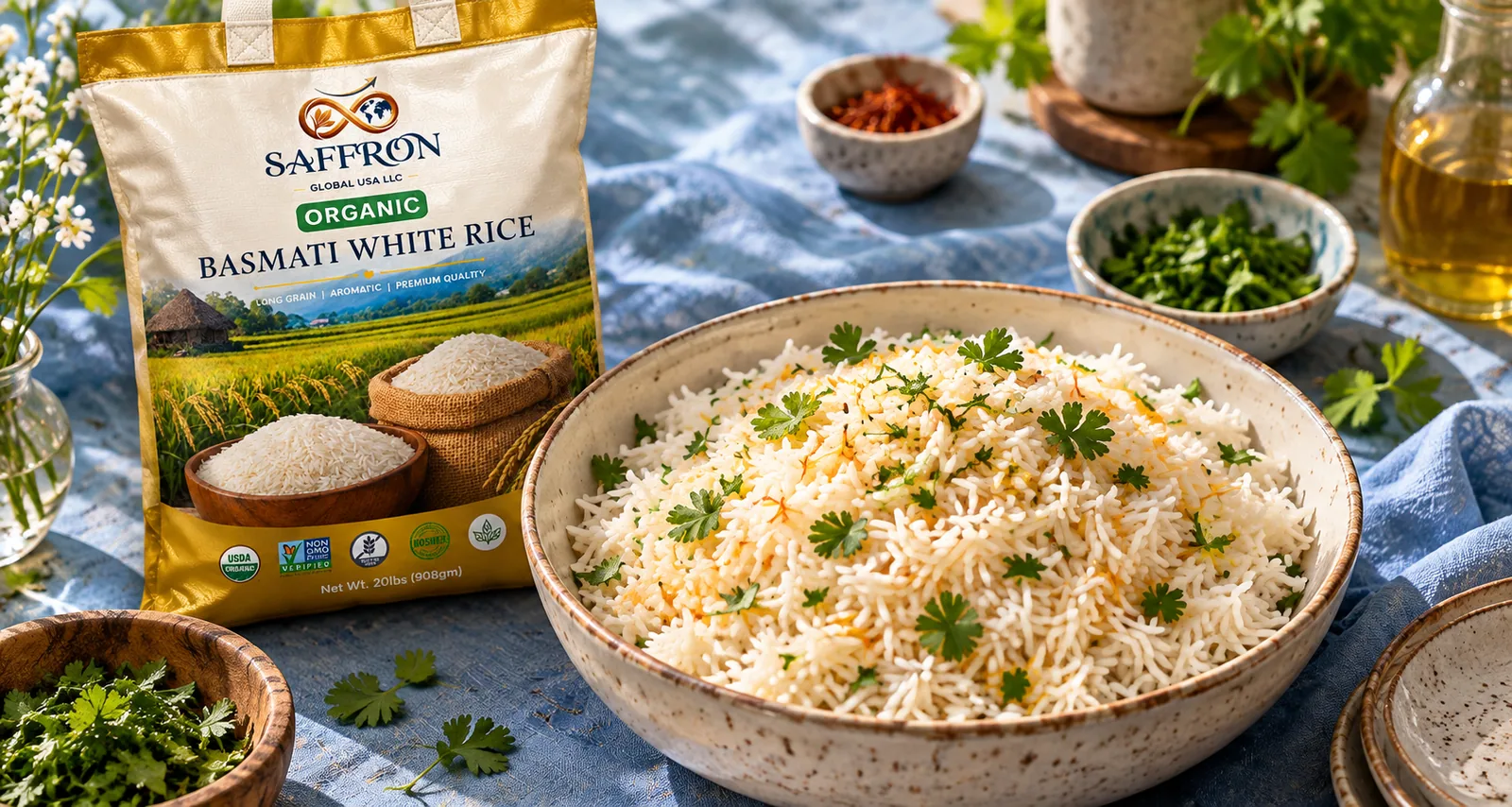
1. Basmati rice. Serve it with dal and curries, or use it for pulao and biryani. Aged basmati cooks up fluffy with separate grains.
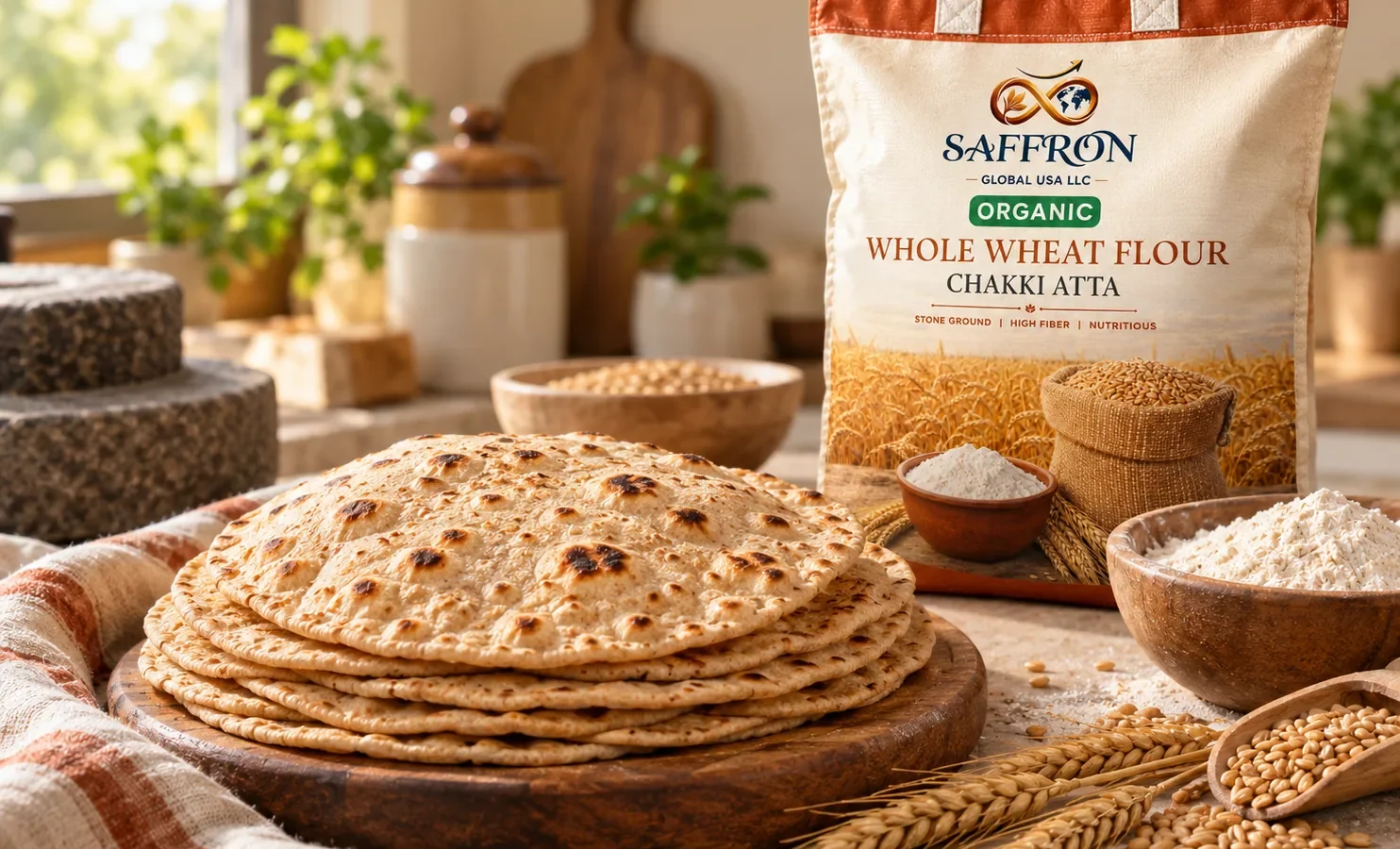
2. Whole wheat atta. This finely ground whole wheat flour is what you use for rotis, parathas and puris. Stone ground chakki atta makes the softest rotis.
Lentils and beans
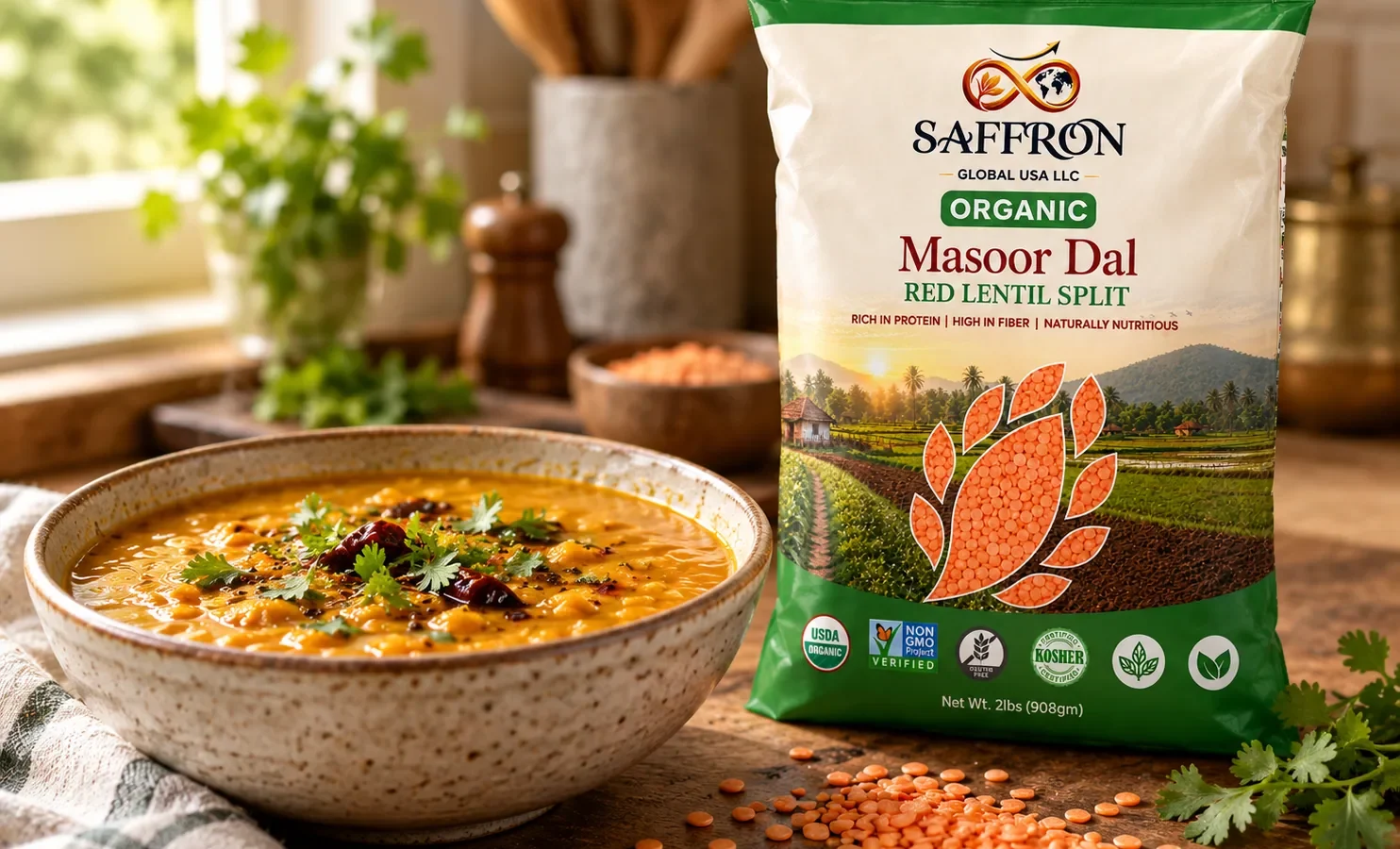
3. Masoor dal. Split red lentils need no soaking and cook in about 20 minutes. If you only buy one lentil, make it this one.
4. Toor or moong dal. A second lentil keeps things interesting. Toor dal is the base for sambar. Moong dal is mild and quick, and it is the classic choice for khichdi.
5. Chickpeas. Dried or canned, they turn into chana masala, salads and roasted snacks.
Fats
6. Ghee. Clarified butter has a high smoke point and a rich, nutty flavor. Use it to temper spices, brush it on rotis or stir a spoonful into rice.
7. Neutral or mustard oil. Keep one on hand for everyday cooking when you do not need the flavor of ghee.
Spices
You do not need forty jars. These five cover most everyday dishes.
8. Turmeric. Earthy and bright yellow. Half a teaspoon is enough for a pot of dal.
9. Cumin seeds. Sizzle them in hot ghee or oil at the start of a dish until they darken slightly and smell toasty.
10. Red chili powder. Adds heat and color. Start with a little and add more to taste.
11. Ground coriander. Mild and slightly citrusy. It rounds out sauces and balances stronger spices.
12. Garam masala. A warm spice blend. Stir it in near the end of cooking so the aroma stays fresh.
A short list of staples you use every week is more useful than a cabinet full of spices you rarely open.
Why buy these organic
These are the ingredients your family eats most often, so they are where buying organic makes the most sense. Our USDA Organic range is grown without synthetic pesticides or fertilizers, and every product can be traced back to the farms it came from.
A week of dinners
With these twelve staples plus fresh onions, tomatoes, garlic, ginger and whatever vegetables are in season, a week could look like this:
- Monday: masoor dal with basmati rice
- Tuesday: rotis with a quick vegetable sabzi
- Wednesday: chana masala
- Thursday: vegetable pulao with yogurt
- Friday: moong dal khichdi finished with a spoonful of ghee